


Protective Mailing Envelopes for Cross-Border Shipping: Moisture, Handling, and Risks
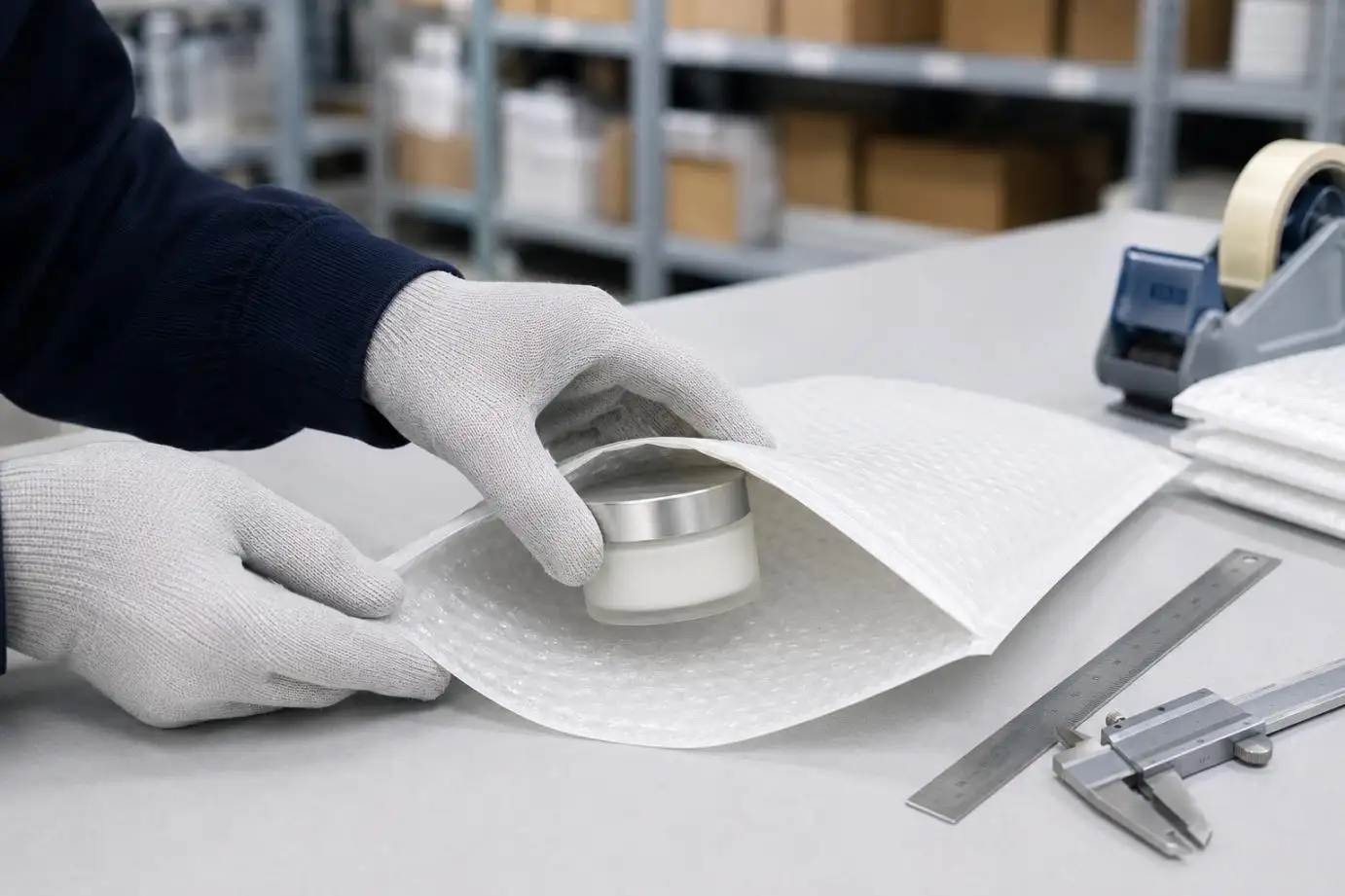
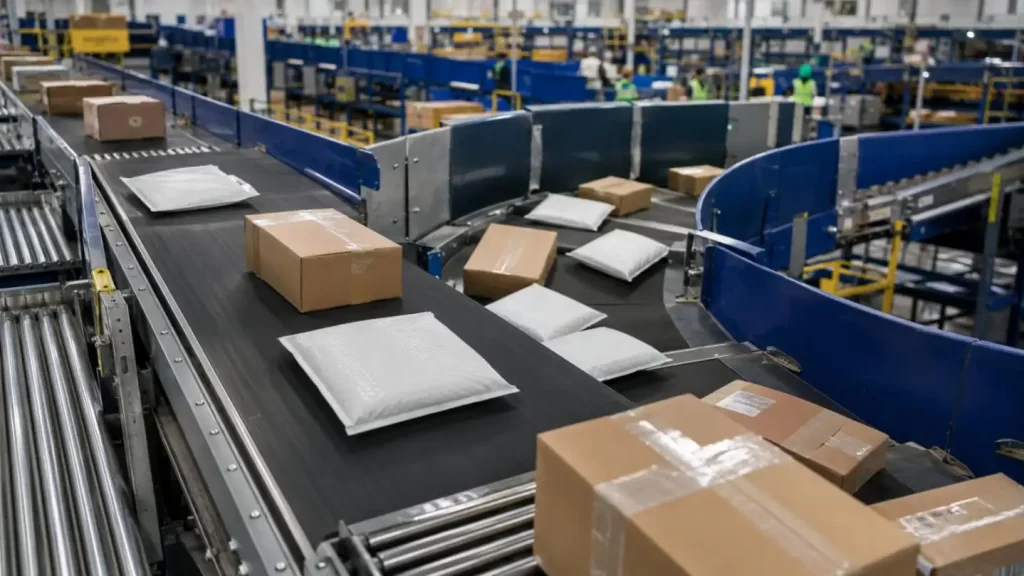
Protective Mailing Envelopes used for international e-commerce must withstand more than a single courier journey. Parcels may remain in transit for days or weeks, pass through multiple sorting networks, and move between different temperature and humidity zones.
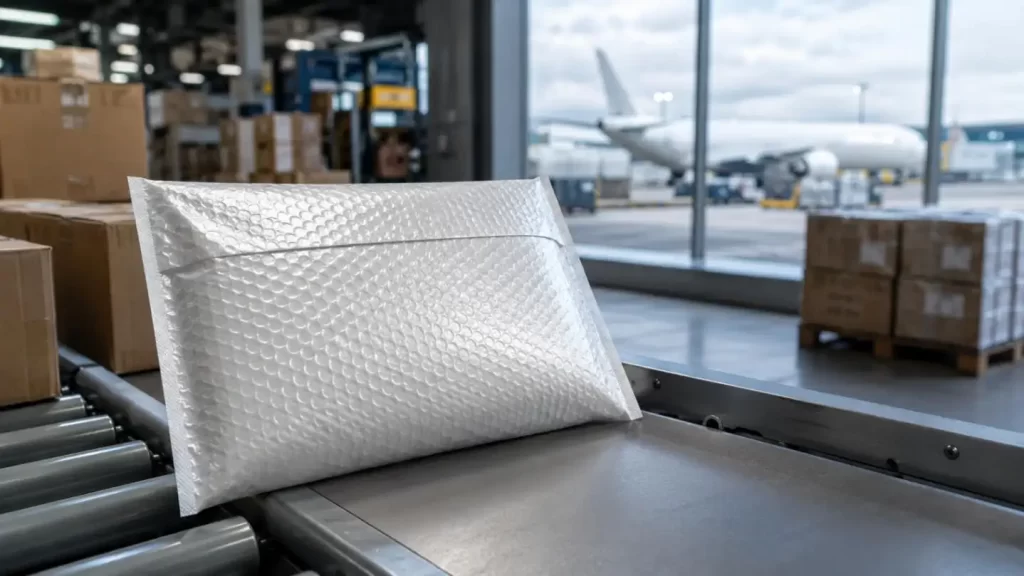
Effective protection depends on the complete package: exterior film, cushioning, usable dimensions, seams, adhesive closure, product geometry, and shipping route. From GT GROUP's manufacturing perspective, material thickness alone is not a reliable measure of cross-border performance.
Build a Route Exposure Profile First
Before specifying Protective Mailing Envelopes, identify where and how damage is likely to occur.
| Route Exposure | Likely Failure | Packaging Requirement |
| Export and import hubs | Drops, conveyor impacts | Impact cushioning |
| Air, sea, and road transfers | Vibration and abrasion | Close fit and soft lining |
| Humid warehouses | Label lifting, corrosion, staining | Moisture-resistant exterior |
| Temperature changes | Condensation, adhesive variation | Stable film and closure |
| Mixed parcel loads | Puncture and compression | Tear resistance and reinforcement |
| Customs inspection | Opened or damaged seal | Resealable or secondary closure |
Cross-border risk increases with transport duration, transfer count, climate variation, and the number of manual handling points. A product shipped by direct air express may therefore require a different specification from the same product moving through postal consolidation and regional delivery networks.
Moisture Control Requires More Than a Plastic Surface
Humidity, Condensation, and Direct Water
These exposures should be evaluated separately:
• High humidity acts gradually and may affect labels, paper inserts, metal parts, and adhesives.
• Condensation can form when a parcel moves between cold and warm environments.
• Direct water exposure includes rain, splashing, and contact with wet warehouse surfaces.
Polyethylene Protective Mailing Envelopes provide practical surface resistance to moisture, but they should not automatically be described as waterproof. Actual performance depends on film continuity, water-vapor transmission, seam integrity, punctures, and closure design.
For moisture-sensitive electronics or metal components, a bubble mailer may need to be combined with:
• A sealed inner bag
• Desiccant
• Corrosion-inhibiting material
• Antistatic or moisture-barrier packaging
• A rigid secondary container
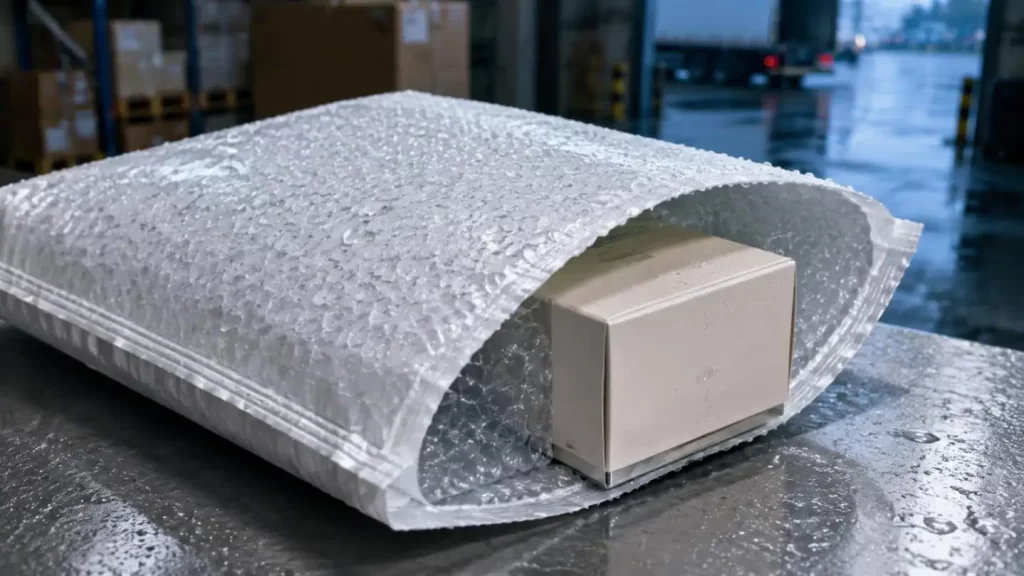
GT GROUP's poly bubble envelope combines a pearl-coated polyethylene exterior with distributed internal air cells. The bonded composite structure provides lightweight cushioning and surface protection for cosmetics, accessories, stationery, gifts, craft products, and other small export goods.
Control Impact, Abrasion, and Puncture
Cushioning Must Match Product Mass
Bubble cells compress during impact, extending deceleration time and distributing force. Relevant specification variables include:
• Bubble diameter and height
• Air-cell distribution
• Air retention after repeated loading
• Film elasticity
• Bond strength between layers
• Packed-product weight
• Product contact area
Thicker cushioning is not always better. Something that is too thick or too heavy can collapse the air cells by concentrating force. Using too much cushioning also can increase a package's size and weight, while providing no protection from damage.
Internal Movement Causes Cumulative Damage
In the case of long-distance transportation by vehicle, an oversized mailer allows a product to slide around, and possibly rub against and ruin coated surfaces and cartons, and over strain the seam.
The product should load without excessive force but should not move freely after sealing. GT GROUP's slitting and bag-converting processes allow the envelope format to be adjusted around actual product dimensions, helping reduce internal movement, excess material, and unnecessary shipment volume.
Sharp Edges Need Local Protection
Bubble cushioning does not by itself result in high puncture resistance due to the fact that metal corners, zippers, tools, or rigid projections can poke through the film from inside.
Items that could be inserted:
• Edge guards
• Inner sleeves
• Local reinforcement
• Folded cardboard inserts
• Rigid trays
• Corrugated outer boxes
Seams and Closures Are Structural Elements
Closures in Cross-Border Protective Mailing Envelopes must remain stable after storage, temperature variation, and repeated manual handling.
Peel and seal strips should be examined for:
• Whether the side seams are straight and uniform
• Heat-seal temperature
• Seam peel resistance
• Initial adhesion
• Long-term closure strength
• Functionality at expected temperature extremes
• Ease of liner removal
• Tamper evidence
• Customs opening and resealing capability
Customs inspection is likely to occur in many cases and a secondary adhesive strip or documented resealing method may be beneficial along with shipping label testing for adhesion, abrasion, and barcode readability.
GT GROUP has film blowing, laminating, slitting, printing, and bag conversion all under one roof. Managing these processes together helps preserve the compatibility of the exterior film, cushioning, printed graphics, seams, and adhesive closure.
Compare the Main Cross-Border Packaging Options
| Performance Factor | Plain Poly Mailer | Bubble Protective Mailing Envelope | Paper Padded Mailer | Corrugated Box |
| Impact protection | Very low | Light to moderate | Moderate | Higher with inserts |
| Moisture resistance | Good | Good | Limited without coating | Limited |
| Compression resistance | Very low | Limited | Limited | Higher |
| Puncture resistance | Limited | Moderate | Structure-dependent | Higher |
| Packaging weight | Lowest | Low | Medium | Higher |
| Best application | Soft textiles | Lightweight sensitive goods | Regular goods on dry routes | Fragile, rigid, or heavy goods |
Protective Mailing Envelopes occupy the space between thin shipping bags and rigid boxes. They are appropriate when cushioning, scratch protection, and low packaging weight matter more than compression strength.
They are not the preferred standalone format for glass, ceramics, heavy hardware, precision instruments, sharp components, products sensitive to bending, or temperature-controlled goods.
Validate the Packed Product Before Export
An inspection of empty envelopes cannot determine shipping performance. A thorough validation plan will:
- Describe acceptable levels of product damage and packaging deterioration.
- Employ production-type envelopes and products.
- Expose sample conditions to expected temperature and humidity.
- Evaluate the effects of simulated drops on the envelope face, edge and corner.
- Evaluate the effects of simulated vibration, puncture, seam, and adhesion.
- Check for air enclosure, print and label integrity, including bar codes.
- Conduct an actual trial over the product shipping route.
ISTA 3A or vendor specified standards may be applicable. Claims for compliance should be based only on the package configuration that was tested.
Track damage-related returns, packing time, shipment weight, replacements, refunds, and reverse-logistics costs. The lowest-priced mailer may not provide the lowest delivered cost.
Avoid Common Specification Errors
• Using one specification for every export market
• Confusing moisture resistance with waterproofing
• Selecting only by film or bubble thickness
• Ignoring product weight and sharp edges
• Leaving excessive internal space
• Overlooking temperature effects on adhesive
• Failing to plan for customs resealing
• Skipping route-specific shipping trials
Develop Route-Specific Protective Mailing Envelopes
Reliable Protective Mailing Envelopes balance cushioning, moisture resistance, fit, puncture control, seam strength, and closure stability. The correct specification begins with the product and distribution route—not with a generic material grade.
GT GROUP can work with packaging buyers to review product dimensions, weight, fragility, destination climate, film structure, cushioning, printing, sealing, and trial requirements. Explore GT GROUP's Protective Mailing Envelopes or discuss a route-specific packaging specification with our manufacturing team.
FAQs
Q1. What cross-border products are suitable for Protective Mailing Envelopes?
Typical applications include cosmetics, jewelry, fashion accessories, phone accessories, stationery, promotional gifts, craft products, and lightweight components. Products should be light enough for flexible packaging and free from unprotected sharp edges.
Q2. How does GT GROUP determine the correct envelope specification?
GT GROUP reviews the product dimensions, packed weight, fragility, surface sensitivity, edge condition, destination climate, shipping method, transit duration, and expected handling frequency. These factors help determine the required size, film, cushioning, seams, and closure.
Q3. Are GT GROUP's Protective Mailing Envelopes waterproof?
Polyethylene exteriors provide practical resistance to humidity, light rain, and wet handling surfaces, but they should not be treated as suitable for full immersion. Overall moisture protection also depends on seams, closures, punctures, and the use of any inner barrier packaging.
Q4. Can GT GROUP manufacture custom-sized Protective Mailing Envelopes?
Yes. GT GROUP can discuss dimensions based on product length, width, thickness, cushioning allowance, loading clearance, and closure area. Correct sizing helps reduce internal movement, material consumption, and unnecessary shipment volume.
Q5. Does GT GROUP provide custom printing for international shipments?
GT GROUP supports customized logos, colors, artwork, and printed packaging designs. Buyers should provide print-ready artwork, color requirements, printing dimensions, material preferences, and expected order quantities for technical review.
Share on Social:


